Unhooking from Norms with A Blade of Grass (EP.92)
The podcast is available for free on your favorite podcasting platforms:
Apple Podcasts | Spotify | Audible | RSS Feed
Updated: May 15, 2026
What happens when the people an organization exists to serve are also the ones designing it?
On this episode, host Tim Cynova is in conversation with Lu Zhang, Gregory Sale, and Diya Vij of A Blade of Grass to discuss what it looks like to approach your organization as a living experiment.
A Blade of Grass supports socially engaged artists through a grants program, an in-fellowship cohort, and a digital publication called Landscapes. But their work goes well beyond their program design. They're actively questioning whether competition-based, project-focused philanthropy actually serves artists. They pay their board members. They use a randomized selection process for small grants. They talk openly about sunsetting the organization in the same breath they discuss 100-year plans. These are not things most organizations do.
This conversation explores practitioner-led governance, the gap between what socially engaged artists need and what traditional arts infrastructure delivers, how to build for responsiveness and long-term strategy at the same time, and what it means to make an organization that doesn't require artists to check their creativity at the door.
If you're a leader questioning default organizational norms, a funder trying to align your grantmaking practices with what artists need, or anyone building infrastructure in a sector that keeps treating creativity as something that happens somewhere else, this one is worth your time.
In this conversation:
What "practitioner-led" really means when it extends from staff to board
The case for randomized grant-making
Why A Blade of Grass paused programming for a full year to do field research
Building a paid, working board and what that changes about governance
How socially engaged artists think about entering and exiting community work and what organizations can learn from that
Holding grief, iteration, and ambition without getting precious about any of it
Links & Resources
A Blade of Grass — Website, Newsletter, Instagram, Facebook, Landscapes
2025 In Fellowship Cohort:
About the Guests
Diya Vij was the Vice President of Curatorial and Arts Programs at Powerhouse Arts in Brooklyn, NY when this episode was recorded, and is committed to critically investigating the evolving role of art in politics and civic life. Most recently, she served as the Curator at Creative Time where she commissioned and stewarded large-scale public art work, launched the public programming space CTHQ, re-launched the Creative Time Summit, and initiated the R&D Fellowship for socially engaged artists. Over the past decade, she has held programming, curatorial, and communications positions at major New York City Institutions. As the Associate Curator of Public Programs at the High Line, she organized dozens of live events and performances with artists, activists, practitioners, and healers. At the New York City Department of Cultural Affairs, Vij launched and co-directed the Public Artists in Residence (PAIR) program. Additionally, she helped lead the Agency’s citywide Diversity, Equity, and Inclusion initiative, and played an active role in public monument efforts, as well as CreateNYC—New York City’s first strategic long-term plan for culture. She was a curatorial fellow and the communications manager at the Queens Museum from 2010–2014. She currently serves on the Boards of A Blade of Grass, the Laundromat Project and the Poetry Project and was co-curator of the Counterpublic Triennial 2023 in St. Louis, MO. [After this episode was recorded in 2026, Diya was appointed the Commissioner of NYC’s Department of Cultural Affairs.]
Gregory Sale is an artist, curator, educator, and community organizer whose work uses creativity as a tool for transformation. His socially engaged practice is grounded in collective experience, relationship-building, and shared authorship to create large-scale, often long-term public projects that address social challenges. For over two decades, Sale’s projects have focused on mass incarceration, reentry, and civic life, centering system-impacted individuals as creative collaborators and leaders. Notably It’s not just black and white (2011) and Future IDs at Alcatraz (2018–19) – a yearlong exhibition and series of community programs developed in partnership with the National Park Service, the Golden Gate National Parks Conservancy, and more than 20 community organizations. Reaching hundreds of thousands of visitors, Future IDs at Alcatraz created an evolving civic space for open dialogue and stories of trauma, transformation, and resilience. Sale co-founded the Future IDs Art and Justice Leadership Cohort, which works with justice-involved leaders and allies to explore how art can support leadership, civic participation, and systemic change. Participants have co-created projects such as Justice + Art Jam (2025), a day of art, advocacy, and resource sharing in Los Angeles. Sale also co-leads initiatives about voting and love as social and political strategies, including #ArtistsWhoVote and the Love for Love series. His work has been supported by Creative Capital, Kenneth Rainin Foundation, A Blade of Grass/David Rockefeller Fund, Art Matters, Center for Artistic Activism, and Andy Warhol Foundation for the Visual Arts. Sale is Professor of Expanded Arts and Public Practice at Arizona State University and serves on the board of A Blade of Grass. He is based in Phoenix and Los Angeles. Gregory’s website and his project Future IDs website.
Lu Zhang is an artist and arts worker. She is the Executive Director of A Blade of Grass (ABoG), an artist-run nonprofit dedicated to socially engaged art. In collaboration with a paid board of artists and practitioners, Lu guides programs rooted in co-creation and dialogue that provide flexible, responsive resources to artists. Under her leadership, ABoG continues to evolve as a nimble organization that adapts its structure and programs to meet the changing needs of socially engaged artists. Before joining ABoG, Lu served as Initiatives Director at United States Artists (USA), a national arts funder supporting artists across all disciplines. There, she launched a new department to expand holistic support for artists, including landmark programs such as Disability Futures and Artist Relief. Previously, Lu was Deputy Director of The Contemporary, a nomadic museum in Baltimore, where she provided strategic oversight and led initiatives to strengthen the local arts ecosystem. As an artist, Lu’s work spans books, drawings, installations, and interventions. She has partnered with Press Press to produce publications, with the George Peabody Library to launch a studio residency program, and founded the Institute for Expanded Research, which activates sites and resources for artist projects. Lu holds an MFA in Painting from the Frank Mohr Institute in the Netherlands and a BFA from the Maryland Institute College of Art in Baltimore. Listen to more with Lu on episode 11 of the body is the brain.
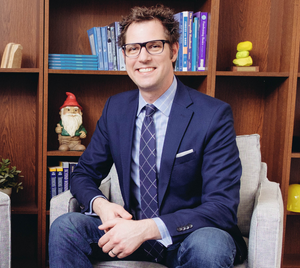
Tim Cynova is the host of the Work Shouldn’t Suck podcast, where he and guests explore bold ideas and practical strategies for creating workplaces where people thrive. At the consulting firm WSS HR Labs, he draws on deep experience leading and advising mission-driven organizations through growth, change, and complexity to help them dust off outdated policies, challenge default approaches, and design values-centered workplaces that align people strategy, organizational culture, and operational infrastructure. A certified Senior Professional in Human Resources (SPHR) and trained mediator, Tim’s path has taken him from orchestral trombonist to C-level roles in multiple $25M+ nonprofits around the globe. Whether consulting, teaching, or recording, he brings curiosity, candor, and a knack for making workplace design engaging and actionable. More at timcynova.com
Transcript
Uploading soon!
The podcast is available for free on your favorite podcasting platforms:
Apple Podcasts | Spotify | Audible | RSS Feed
If you enjoy the show, please leave a review on iTunes to help others discover the podcast.